Toys in English for Kids
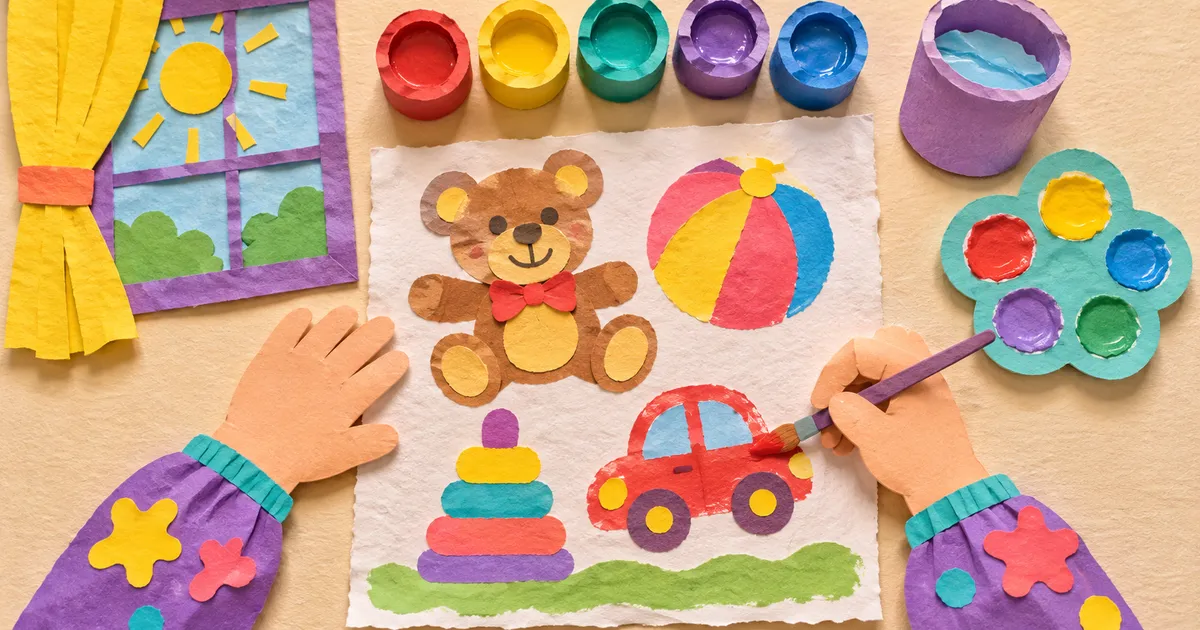
Toys in English for Kids can start with 10 nouns children can see, touch, sort, and use in short sentences. Begin with familiar objects: a ball, doll, puzzle, or toy car. Say each word clearly, add one action, and revisit the words over days so a beginner can listen before speaking. A child who knows two or three languages may connect the English word directly with an idea instead of translating it. Aim for practical speech: “My ball is red,” “I have a puzzle,” and “Let’s play with the train.”
📥 Toy Words Speaking Pack
Practice favorite toy words, simple phrases, and weekly speaking habits for kids.
Leave your email — we'll send the PDF to your inbox.No spam — the PDF plus one short reminder. Unsubscribe anytime.
Why Toy Words Help Children Speak
Toys make meaning visible. A child can hold a kite, push a train, or point to a teddy bear while hearing its name. The object and action explain the word without a long definition.
A small set of toys in English for kids supports sentence patterns. Children can practise “This is a…,” “I have…,” “Where is…?” and “Can I play with…?” The noun changes while the familiar frame helps children progress from single words to short exchanges.
10 Useful Toy-Related Words with Examples
Choose words matching toys your child knows. The table contains exactly 10 core items. Each example adds a colour, action, place, or preference, turning the word into a complete thought.
When teaching these toys in English for kids, use singular and plural forms where natural: one ball, two balls; one block, six blocks. Keep fixed pairs—“teddy bear,” “toy car,” and “board game”—together so children hear each as one unit.
How to Build Vocabulary by Age
For school-age kids, begin with four or five objects and short instructions: “Find the ball,” “Show me the doll,” or “Put the car here.” Let the child point or move the toy before requesting a spoken answer. Listening is active learning; speech may follow later.
For school-age kids, expand toys in English for kids with descriptions and choices. Ask, “Is the kite red or green?” or “Which toy can roll?” Children can sort toys by colour, size, material, or action, then explain one choice in a short sentence.
For school-age kids, keep the language age-respectful. Add current interests: model, controller, craft kit, card game, or building set. Older learners can compare rules, explain how a toy works, or describe a favourite childhood toy in fuller sentences.
Memory Tricks and Word Patterns
Group words by action: throw a ball, build with blocks, fly a kite, solve a puzzle, and push a toy car. Giving each noun a job strengthens recall during conversation.
Notice patterns without turning play into a grammar lecture. Most toy nouns take -s in the plural: balls, dolls, trains, puzzles, and kites. Compound nouns retain their word order: a toy car is a car used as a toy; a car toy sounds unnatural. Revisit words after a short gap, then mix old and new items instead of presenting a fresh set every day.
Practice Activities at Home
Fit five minutes into an existing routine. During tidying, ask your child to name or find two toys. At playtime, offer a choice: “Do you want the puzzle or the train?” Accept pointing first, then model the full answer: “I want the train, please.”
Three-minute Toy Shop
Place four toys on a table. Assign shopkeeper and customer roles. Use “Can I have the ball, please?”, “Here you are,” and “Thank you.” Swap roles after three requests. Another day, add colours or numbers: “Can I have two blue blocks, please?”
Picture clues help when toys are not nearby. Show part of a toy in a photo and ask your child to identify it. For a harder task, hide one item and ask, “What is missing?” Both games strengthen recall instead of repetition.
Common Pitfalls and Sensible Next Steps
Avoid presenting twenty new words at once, correcting every sound, or repeating “What is this?” A child may know a word but tire of testing. Mix questions with comments and actions: “The train is fast. Put it beside the puzzle.” Correct errors by repeating the natural form without stopping the game.
Keep the first set of toys in English for kids small until your child understands the words in varied sentences. Then add two or three items suited to current play. Skip a fixed weekly word count; aim for recognition, clear attempts, and independent use of a few toy words.
- Try naming five toy animals with your four-year-old during daily playtime.
- Practice sorting eight toys by color, size, or type with six-year-olds.
- Use “Toys in English for Kids” vocabulary cards for ten-minute review sessions.
- Avoid translating every word; demonstrate meaning through gestures, objects, and simple choices.
- Repeat six new toy words across three games before introducing more vocabulary.
When a word has several meanings or pronunciations, Cambridge Dictionary is a useful check before turning it into child-friendly examples.
Frequently Asked Questions
How Many Toy Words Should a Child Learn at One Time?
Four to six new words suit beginners, especially school-age kids. Older children may handle a larger set, but familiarity matters more than age. Add words once your child recognises the current set in mixed order and uses some in a phrase. Reuse earlier words in later games to keep them active.
Should I Translate Each Toy Word into My Child’s Other Language?
Translation helps when a word remains unclear, but need not come first. Show the object, demonstrate an action, or use a picture before translating. For multilingual children, this builds a direct link between the English word and its meaning. Translate briefly when confusion or frustration persists.
How Can Our Tutors Teach Pronunciation Without Making My Child Anxious?
Model the word slowly once, then use it in a sentence. If your child says it unclearly, answer with the correct form: “Yes, that is a puzzle.” The response provides a clear model without making each attempt a test. Short practice, frequent listening, and regular speech work better than demanding flawless repetition.
Can Toys in English for Kids Help a Complete Beginner?
Yes. Toys in English for Kids suit complete beginners because objects reveal meaning. Start with listening tasks such as “Touch the ball” or “Find the train.” Then offer a phrase to copy, such as “My ball” or “I want the train.” Increase sentence length once the shorter form feels comfortable.
- Start with four familiar toys and name them clearly.
- Practice one action and one short sentence for each word.
- Repeat the words in a game, then add new items gradually.
A short one-to-one lesson can show what level and pace fit your child — book a trial English lesson.
Stay updated on our latest tips and resources by following us on Instagram LearnLink.