Parts of a Bike in English for Kids
Learn 16 bike words, from wheel and pedal to brake and bell. Parts of a Bike in English for Kids: Words and Activities offers model sentences and games for a real bike, photo, or drawing. Begin with parts your child can point to, then add actions such as “turn the handlebars” and “ring the bell.” British and American variants prepare multilingual children for words heard at school, online, or while travelling.
Key Vocabulary for the Main Parts of a Bike
When using Parts of a Bike in English for Kids: Words and Activities, start with six to eight visible parts. Add words when your child identifies each part without help. Use the full table for later practice.
Tyre and tire are both correct. British English favours tyre; American English uses tire. Children may likewise hear seat and saddle.
A helmet is riding gear, not a bike part. Sorting by meaning reinforces the difference: the bike has a chain and pedals; the rider wears a helmet.
Bike Words in Useful Sentences
Parts of a Bike in English for Kids: Words and Activities pairs nouns with actions. Practise “ring the bell,” “push the pedals,” “use the brakes,” and “turn the handlebars” instead of drilling isolated nouns.
Build descriptions next: “The red bike has a black seat,” “The front wheel is next to the fork,” and “The bell is on the handlebars.” Children practise colours, positions, and bike vocabulary together. Older learners can add reasons: “I use the brakes because I need to slow down.”
Point, Say, and Act
Ask your child to point to a part, name it, and show its job without riding. Try: “Point to the bell. Say ‘bell.’ Now show me how you ring it.” Continue with the seat, pedals, handlebars, and brake levers.
Take turns asking, “What is this?” and answering, “It is the chain.” Then ask, “What does it do?” The child might answer, “It helps the wheel turn.” Accept a correct short answer before requesting a longer sentence.
Activities for Different Ages
Choose four distinctive parts: wheel, seat, pedal, and bell. Say each word, point together, and repeat it during a one-minute search. Your child can colour a bike drawing while following instructions: “Colour the wheels grey” or “Make the bell yellow.”
Cover labels on a bike picture and ask your child to replace them. Then play mechanic with safe pretend requests: “Check the front wheel” or “Show me the brake lever.” Parts of a Bike in English for Kids: Words and Activities should progress from naming to instructions.
Add precise terms such as rim, hub, spokes, and fork. Ask the learner to compare two bikes, locate each part, or describe a problem: “The chain has come off” or “The rear tyre needs air.” A photo works when no bike is available.
Simple Ways to Practise at Home
Follow three steps: find, name, use. Ask your child to find the handlebars, say the word, then form a sentence: “The handlebars help me steer.” Five words per round keep the task focused.
For a matching game, write bike words on paper slips and place them beside a drawing. Your child moves each label to its part. For a harder version, replace names with clues: “You push these with your feet” leads to pedals.
Across LearnLink lessons, our English tutors can revisit the words through listening, speaking, and reading. At home, Parts of a Bike in English for Kids: Words and Activities follows the pattern: hear the word, find the part, form a sentence, and review it later.
Common Mistakes and Clear Corrections
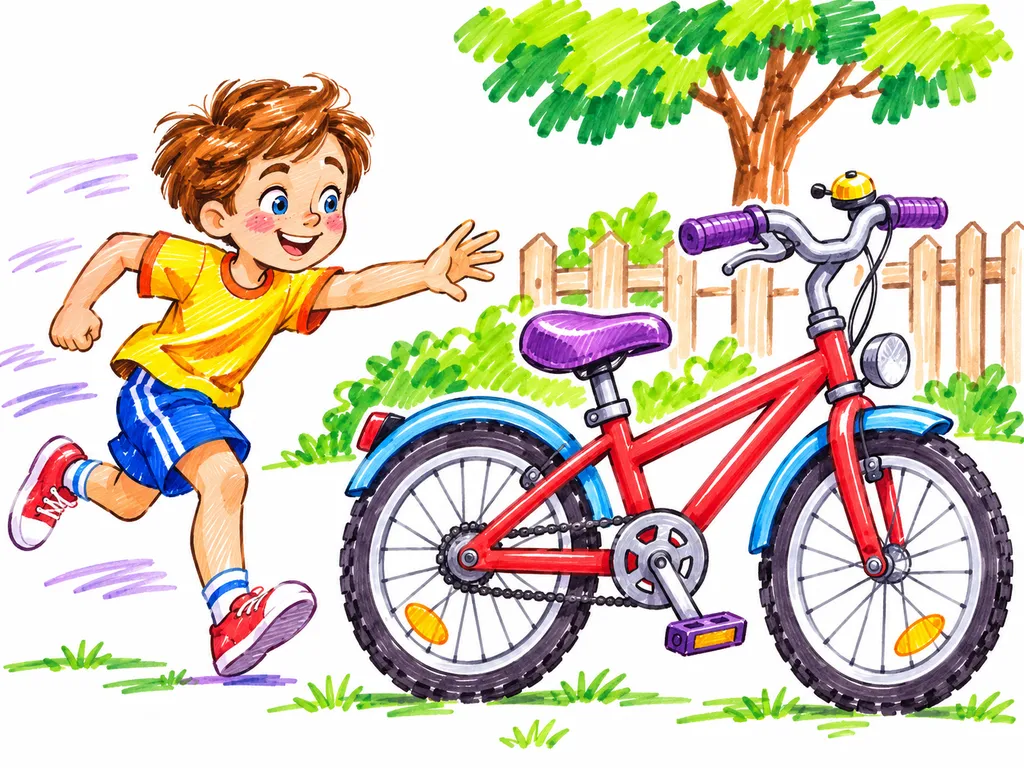
Children may treat wheel and tyre as synonyms. Show the difference in a picture: the tyre is the rubber outer part; the wheel includes the tyre, rim, spokes, and hub.
Handlebars is plural: “Hold the handlebars,” not “Hold the handlebar.” Pedal works as a noun or verb. “Put your foot on the pedal” names a part; “Pedal slowly” describes an action.
Children may confuse break and brake. A brake slows the bike; break means to damage something or pause an activity. Contrast them in context: “Use the brake to stop” and “Do not break the reflector.”
- Try naming five bike parts aloud with children aged six to nine.
- Practice correcting “wheel” and “tire” using one labeled picture book.
- Use two toy bikes to compare handlebars, pedals, seats, and chains.
- Ask your child to point, name, and correct three mixed labels.
- Repeat difficult words twice, then praise one clear correction immediately.
When a word has several meanings or pronunciations, Cambridge Dictionary is a useful check before turning it into child-friendly examples.
Frequently Asked Questions
How Many Bike Words Should My Child Learn at Once?
Start with four to eight words, based on age and attention. Wheel, seat, pedals, handlebars, brakes, and bell form a practical first set. Use the Parts of a Bike in English for Kids: Words and Activities sequence in short rounds. Add frame, chain, tyre, and reflector after the first words become familiar.
Should My Child Learn “Tyre” or “Tire”?
Teach the school’s spelling, but present both forms. Tyre is British; tire is American. Both name the rubber part of a wheel. Multilingual children may encounter either form in books, apps, or lessons, so recognising both matters.
Does a Helmet Count as a Bike Part?
No. A helmet is safety gear worn by the rider, not a bike attachment. Turn the distinction into a sorting task: place wheel, chain, and bell under “bike parts,” and helmet, gloves, and suitable shoes under “things a rider wears.”
What Can We Use If We Do Not Have a Bike at Home?
Use a large photo, toy bike, or drawing. Your child can point, label parts, follow instructions, and describe colours. With a street scene in a picture book, ask your child to find each bike, name a visible part, and describe the rider’s action.
Start your child's English journey today — book a trial lesson with LearnLink.
Stay updated on our latest tips and resources by following us on Instagram LearnLink.