Accessories in English for Kids
Accessories in English for Kids: Words and Activities teaches names for items children wear or carry, then puts those words into short speech. Start with familiar objects: a hat, bag, belt, watch, and sunglasses. Touching an item, choosing it for an outfit, or using it in a game strengthens recall. Focus on practical questions and answers: “Where is my cap?”, “These are my gloves,” and “I am wearing a blue scarf.”
Start with Useful Accessory Words
In Accessories in English for Kids: Words and Activities, start with items your child sees at home or outdoors. Teach each object with a sentence. A child learning “backpack” can practise “My books are in my backpack.”
Sort vocabulary by purpose and choose words that match your family’s climate and routines.
“Jewellery” is the British spelling; “jewelry” is standard in the United States. A “purse” may mean a small money holder or a handbag. Teach both as correct regional forms.
Put the Words into Short Sentences
Use Accessories in English for Kids: Words and Activities as a speaking guide, not a naming task. Begin with “This is my hat” and “These are my glasses.” The contrast between this is and these are shows whether an accessory is one item or a pair.
Next, add verbs. We wear a watch, necklace, belt, or pair of gloves. We carry a bag, wallet, or umbrella. We put on an accessory before use and take it off afterwards. Connect ideas: “I put on my scarf because it is cold” or “I am carrying an umbrella because it is raining.”
Turn the words into conversation: “Whose cap is this?”, “What are you wearing?”, “Where are your sunglasses?”, or “Which bag do you want?” Across LearnLink’s online lessons, our tutors ask short follow-up questions that extend one-word answers into complete thoughts.
Choose Activities for Your Child’s Age
Adapt Accessories in English for Kids: Words and Activities to age and attention span. For school-age kids, choose four real objects, such as a hat, scarf, bag, and pair of sunglasses. Name them, hide one, and ask, “What is missing?” Let your child point before saying the word.
For school-age kids, add sorting and description. Group accessories by season, colour, material, or purpose. Ask for a reason: “The scarf goes in the winter group because it keeps my neck warm.” Dress a paper character or toy for a rainy day, family event, or trip.
Give older learners realistic choices. Plan a weekend packing list, compare two outfits, or classify accessories as practical, formal, or decorative. Request one reason: “I would take a backpack instead of a handbag because it has more space.”
Build Practice into Family Routines
Repeat vocabulary in three settings: during the morning routine, before leaving home, and while viewing a picture. Ask, “Do you need your cap?”, “Have you got your bag and watch?”, or “Can you find three accessories and describe them?”
Keep correction brief. If your child says, “I am wearing a backpack,” model the natural form: “Yes, you are carrying a backpack.” The correction preserves conversation. Revisit harder words in the next game instead of demanding repeated recitation.
Two-minute Accessory Challenge
Choose one accessory without showing it. Give three clues about its use, colour, or location: “It is black. I carry money in it. It is in my bag.” Your child guesses, then describes a new item. Accept “wallet” or “purse” when either fits your family’s English.
Correct Common Accessory Mistakes
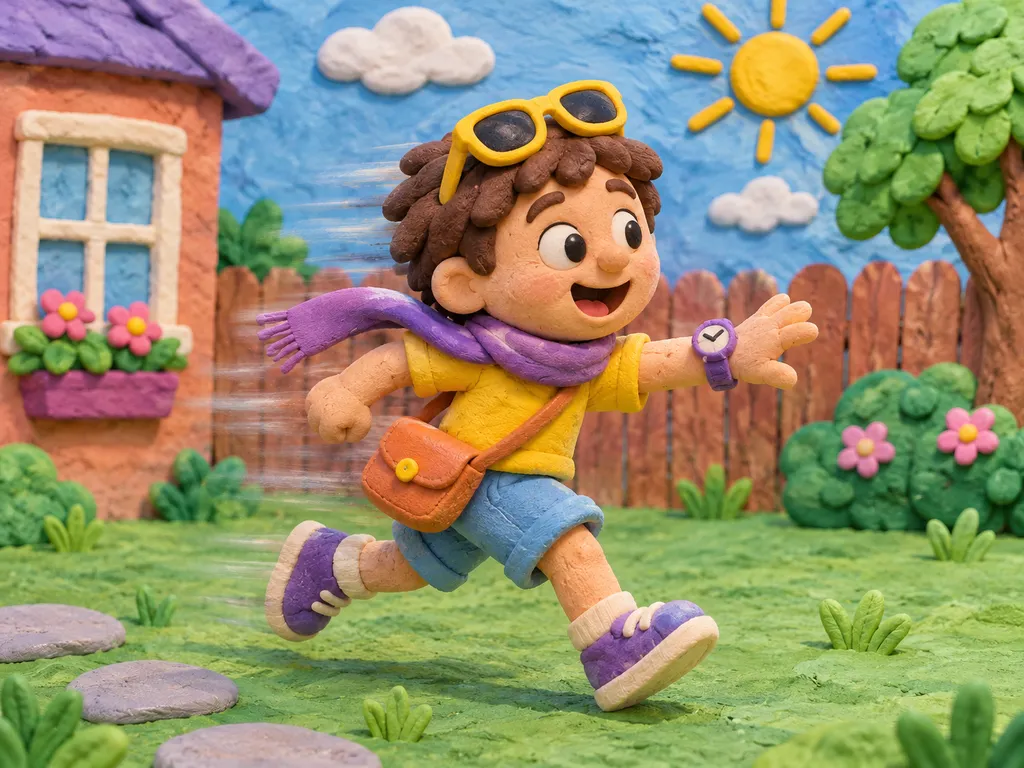
Pair words need care. We say “glasses,” “sunglasses,” and often “earrings” in the plural. For one set, use “a pair of glasses” or “a pair of earrings.” Do not place a before a plural form: say “These are sunglasses,” not “This is a sunglasses.”
Children may mix up wear, carry, and use. A watch is worn on the wrist, a handbag is carried, and an umbrella is used when needed. Context changes the verb: a backpack is normally carried, but a child may say, “I am wearing my backpack on my back.”
Check word order with colours and possessives. English uses “my blue scarf,” not “the scarf blue,” and “your new watch,” not “the your new watch.” Model the full phrase, then change one detail: “my blue scarf,” “my green scarf,” and “my green hat.”
- Point to three accessories and ask your child to name each aloud.
- Sort six picture cards into wear, carry, and use groups together.
- Read one picture book and pause whenever an accessory appears.
- Model two incorrect sentences, then invite your child to correct them.
- Review five accessory words using a quick point, name, and correct routine.
When a word has several meanings or pronunciations, Cambridge Dictionary is a useful check before turning it into child-friendly examples.
Frequently Asked Questions
How Many Accessory Words Should a Child Learn at Once?
Accessories in English for Kids: Words and Activities works in small groups. For a young beginner, start with four to six familiar words and practise them for a few days. An older child may manage eight to twelve, especially with known words. Add vocabulary after your child recognises earlier items and uses them in short sentences.
Should Children Learn British and American Accessory Words?
Teach the form your family, school, or tutor uses most, then mention a regional alternative when needed. A child can know that “jewellery” and “jewelry” are spelling variants, or that “purse” has different meanings. Do not test every regional form. Aim for understanding and consistent usage.
How Can a Parent Practise Accessory Words Without Fluent English?
Use reliable sentence frames: “This is a…,” “These are…,” “I am wearing…,” and “Where is my…?” Check pronunciation with a trusted learner’s dictionary, then practise with objects or pictures. Grammar explanations are unnecessary. Accurate examples, careful listening, and regular short practice provide a sound model.
When Should a Child Start Spelling Accessory Words?
Begin after your child can recognise and say the words confidently. Follow three steps: match labels to objects, build short words such as “hat,” “bag,” and “tie” with letter cards, then write one outfit description or packing list. Practise for five minutes and connect difficult spellings such as “bracelet” and “jewellery” to meaning.
If your child needs steady speaking practice, start small — choose a trial lesson.
Stay updated on our latest tips and resources by following us on Instagram LearnLink.